
The US Food and Drug Administration (FDA) collects user fees under the Medical Device User Fee Amendments (MDUFA) to fund the review and oversight of medical devices. This article explains the main fees for FDA fiscal year 2025 (1 October 2024 – 30 September 2025). Fees are adjusted every year – always check the current FDA fee notice.
1. Premarket submission fees by device class
Whether and which premarket submission is needed depends mainly on the device’s risk classification.
- Class I (low risk): most devices are exempt from premarket notification but must still be registered and listed. Example: an orthodontic retainer (product code BRW) is a 510(k)-exempt class I device – the company only needs to register and list and pay the annual establishment registration fee of USD 9,280.

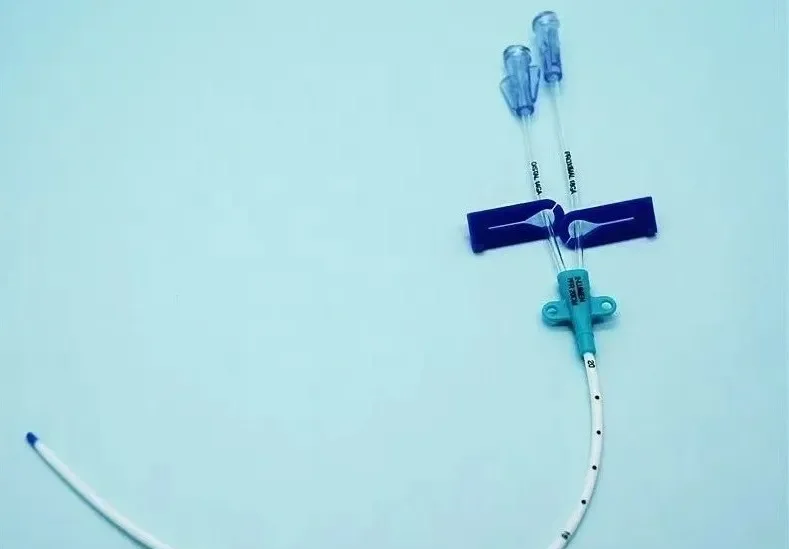
- Class II (moderate risk): usually require a 510(k) premarket notification. The standard fee is USD 24,335; qualifying small businesses pay USD 6,084. Example: an anaesthesia conduction catheter (product code BSO) requires a 510(k), so the company pays the 510(k) fee plus the annual registration fee of USD 9,280.
- Class III (high risk): usually require premarket approval (PMA). The standard fee is USD 540,783; qualifying small businesses pay USD 135,196. Example: a high-frequency ventilator (product code LSZ) requiring a PMA – the company pays the PMA fee plus the annual registration fee of USD 9,280.
2. Annual establishment registration fee
- Establishment registration: USD 9,280 per year in FY2025. This fee applies to most registered establishments regardless of company size – there is no small business reduction.
- Device listing: no fee, but listings must be reviewed and updated annually so that the information remains accurate.
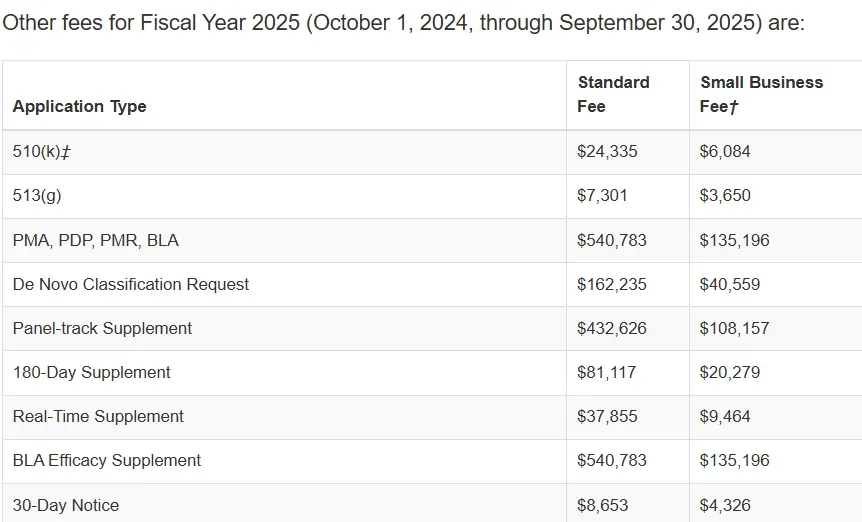
3. Fees for other submission types (FY2025)
4. Annual adjustment
FDA adjusts its fees each year for inflation and other factors; new fees take effect on 1 October. Companies should follow the changes and plan their budgets accordingly.
5. Payment
Fees are paid electronically through FDA’s user fee system: you create a cover sheet to obtain a payment identification number (PIN) for premarket submissions, while the annual registration fee is paid via the Device Facility User Fee (DFUF) website. Make sure the payment reference is correct to avoid failed or delayed payments – and the fee must be paid before the submission is accepted for review.
6. Small business determination (SBD)
Eligibility
A company – including all its affiliates – with gross receipts or sales of USD 100 million or less in the most recent tax year can apply for small business status and pay reduced fees for 510(k), De Novo, PMA and other submissions. Businesses with gross receipts or sales of USD 30 million or less may also qualify for a waiver of the fee for their first PMA.
Application process
- Gather documents: US companies provide their most recent signed and dated federal income tax return; foreign companies provide Form FDA 3602A with Section III certified by their national tax authority.
- Complete the form: US companies use Form FDA 3602, non-US companies Form FDA 3602A.
- Log in to the CDRH Portal and create a new SBD request.
- Watch for e-mail notifications from FDA and check the status of your request in the portal.
FAQs
- When can I apply? FDA accepts SBD requests from 1 August before the start of the fiscal year (1 October). For FY2025, requests were accepted from 1 August 2024 to 30 September 2025.
- What if my tax authority will not certify Form 3602A Section III? Provide a written explanation of why certification cannot be obtained, including the tax authority’s refusal in English, together with Form 3602A. FDA reviews each case individually.
- What if I pay before being granted small business status? You pay the standard fee, and FDA will not refund the difference later. To pay the small business fee, wait until you have received your SBD decision number before submitting.
- Does small business status expire? Yes – it expires on 30 September of the fiscal year for which it was granted, so you must reapply each year.
How EVERBIZ can help
EVERBIZ supports manufacturers with FDA registration and listing, US Agent services, 510(k) and De Novo submissions and small business applications. Contact us.
This article reflects FDA fees for fiscal year 2025 and is for general information only. Current fees are published by FDA in the Federal Register.