
EVERBIZ | Original compilation. Please credit the source when republishing.
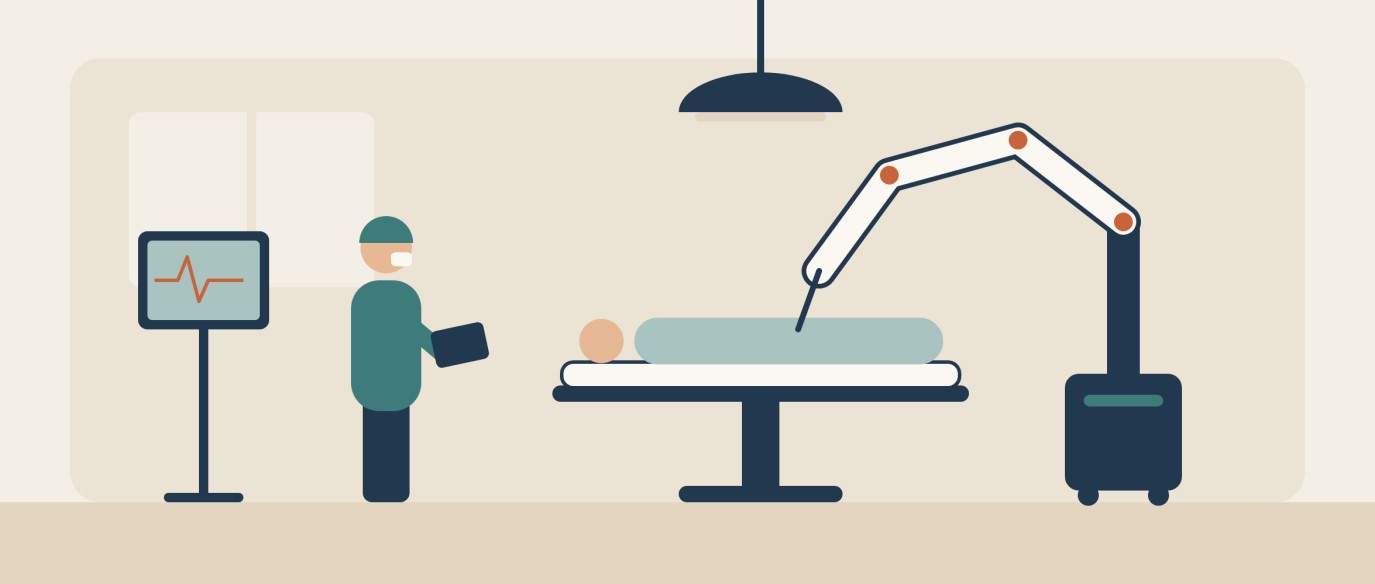
On 6 November 2026, the US FDA’s Center for Devices and Radiological Health (CDRH) published a discussion paper titled Evaluating Benefit-Risk in Robotic Medical Devices with Autonomous or Remote Teleoperation Capabilities. It invites comments from industry, clinicians, patients and the public, with a deadline of 5 January 2027.
To be clear from the start: this is neither guidance nor regulation. FDA states explicitly that the paper is not draft or final guidance, does not propose or implement any policy change, and does not represent FDA requirements. It therefore has no “effective date”, and manufacturers do not need to change their submissions because of it. Its significance lies elsewhere: FDA is taking stock of an emerging product category, and today’s discussion may well become tomorrow’s guidance.
Key dates at a glance
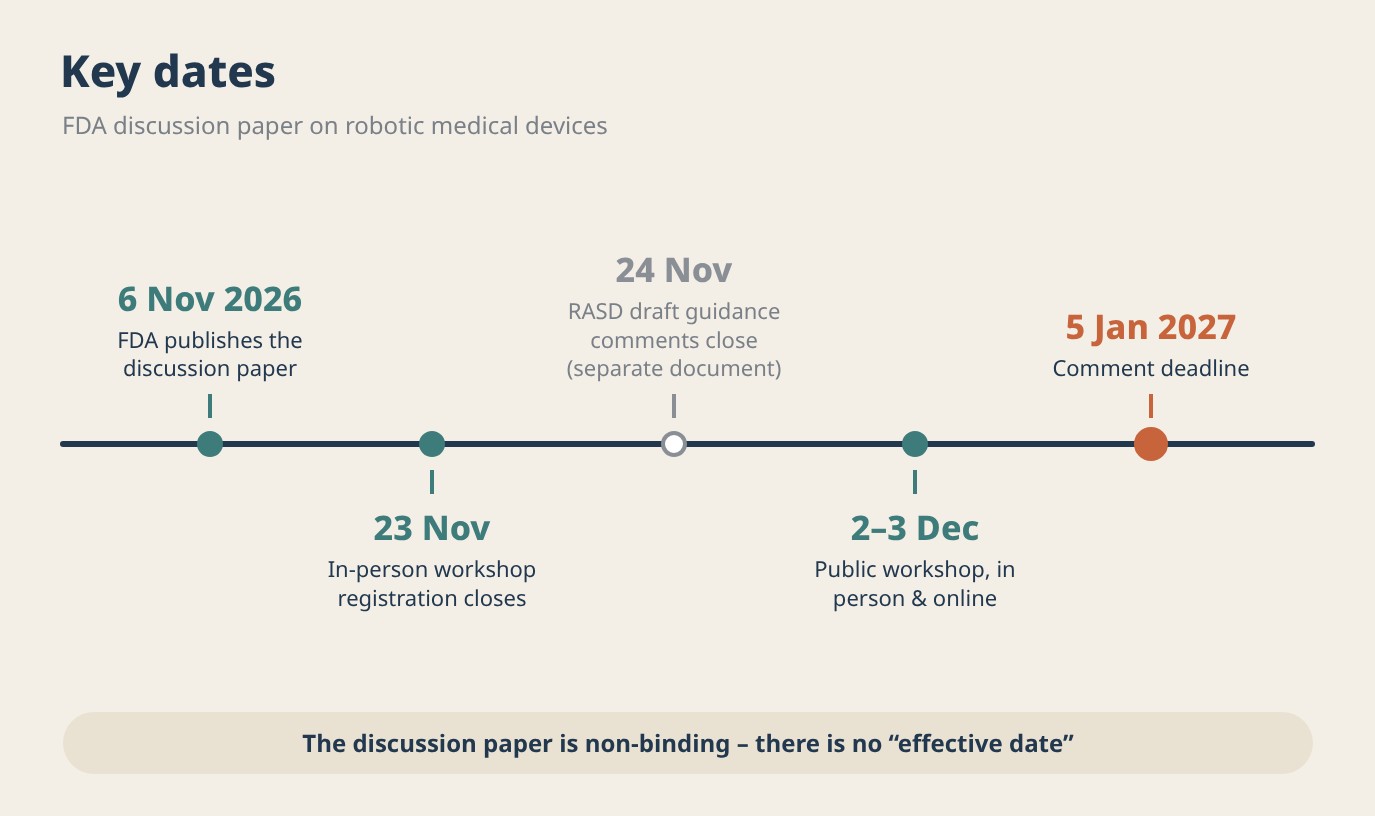
| Item | Date | Notes |
|---|---|---|
| Discussion paper published | 6 November 2026 | Published by CDRH; public docket opened at the same time |
| Media coverage (MD+DI) | 12 November 2026 | News source for this article |
| In-person registration deadline | 23 November 2026 | May close early when full; online registration is not affected |
| Public workshop | 2–3 December 2026 | 10:00–16:00 US Eastern Time (16:00–22:00 CET), in person and online |
| Comment deadline | 5 January 2027 | Docket FDA-2026-N-13135 (Regulations.gov) |
| Effective date | None | The discussion paper is not binding |
First, two terms: “autonomy” and “remote teleoperation”
1. Autonomy
FDA defines autonomy as a system’s ability to perform tasks and make decisions without user intervention, based on its current state and what it senses.
One point is easy to confuse: “automated” is not the same as “autonomous”.
- Automated: executes fixed rules with fully predictable behaviour – for example, running a programme once parameters are set;
- Autonomous: can adapt substantially to the actual situation, with an element of “planning” and “judgement”.
FDA is concerned with the latter. Autonomy is also not a yes-or-no property but a continuum, from “fully controlled by the clinician” to “fully autonomous”. The paper cites the 0–5 level scale commonly used in academia (similar to the levels used for self-driving cars) as well as the “degree of autonomy” framework in IEC/TR 60601-4-1, and acknowledges that there is not yet a widely accepted, unified classification – one of the very points on which FDA is seeking input.
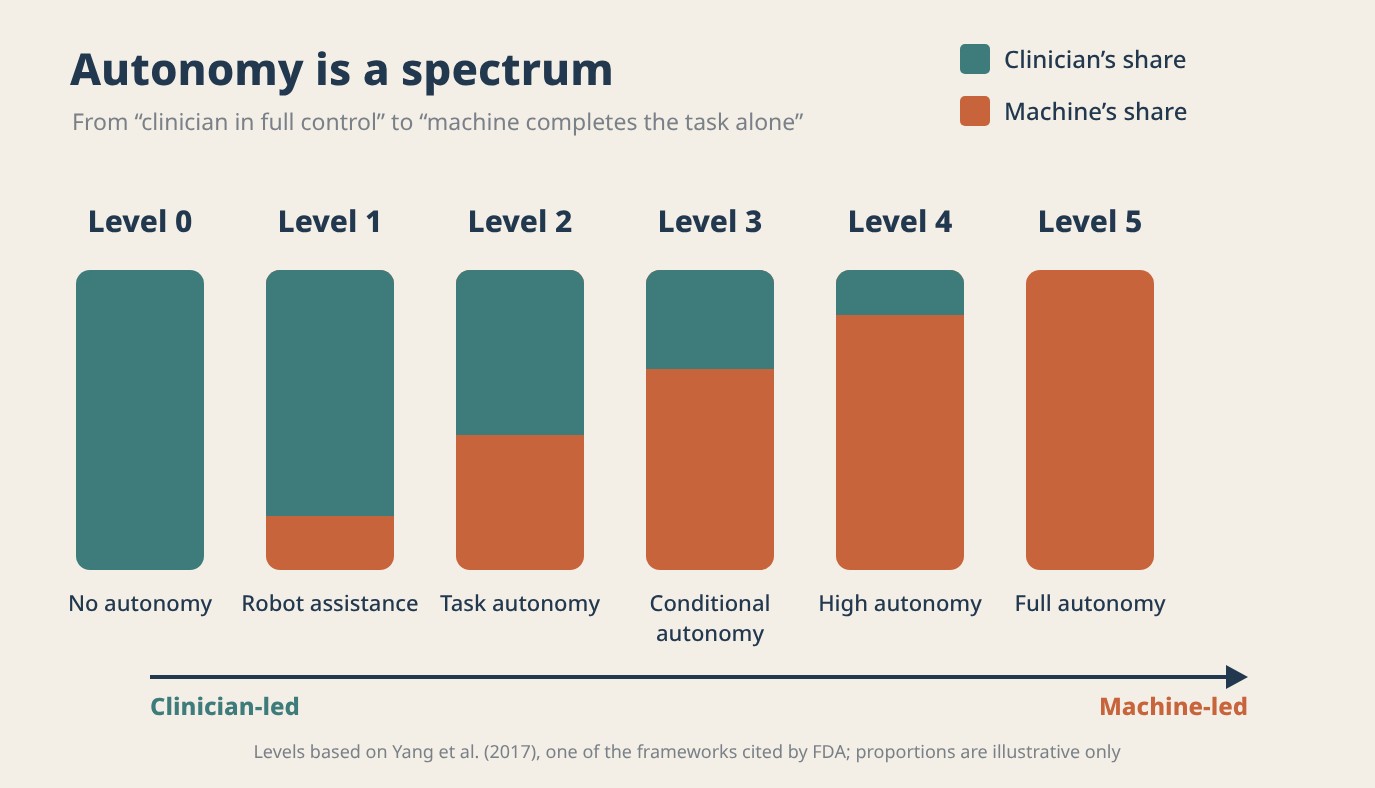
FDA’s examples include automated peripheral venous blood draws without a phlebotomist and autonomous identification and control of internal bleeding.
2. Remote teleoperation
This means the clinician is not in the same room as the patient but controls the device in real time over a network. It ranges from performing a single step remotely to performing an entire procedure remotely. Beyond surgery, diagnostic applications such as remote ultrasound are also included.
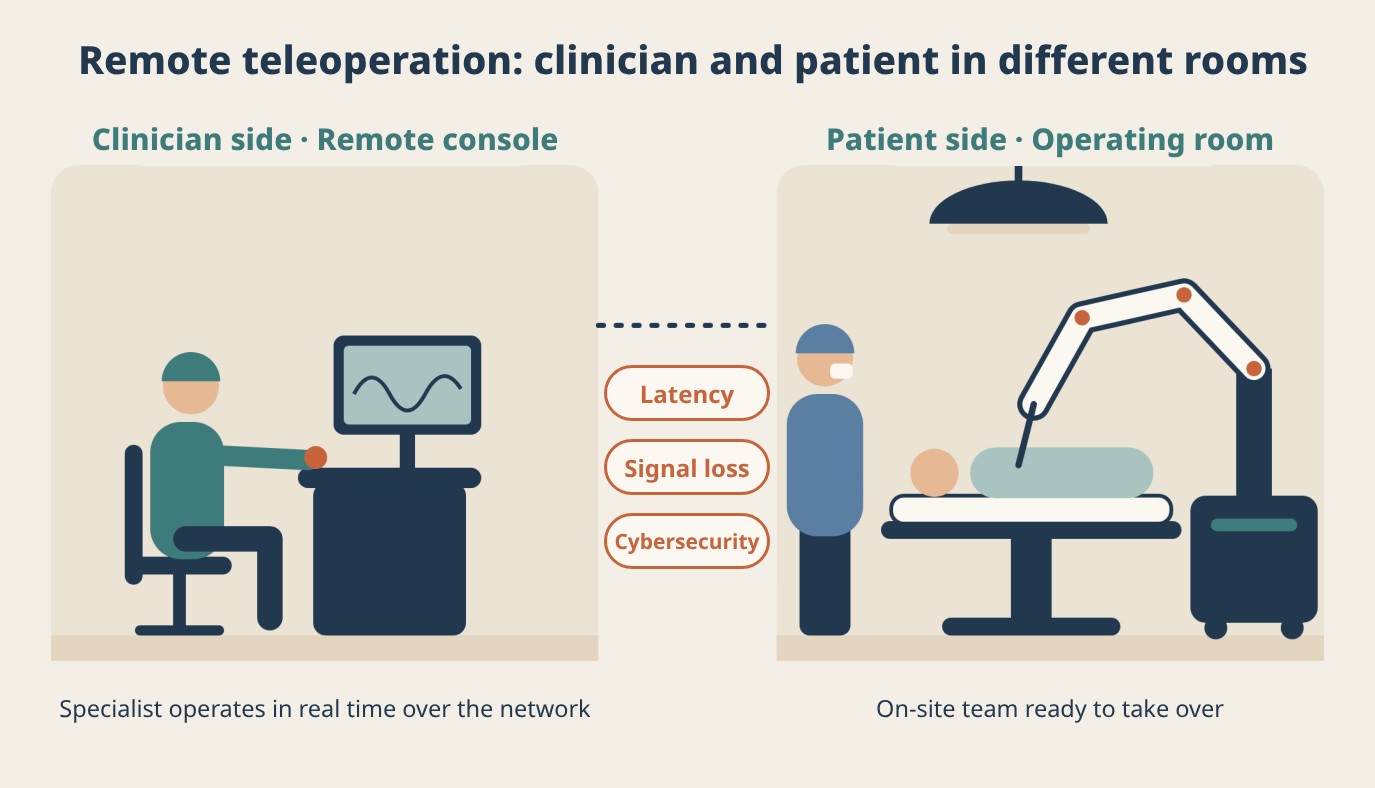
FDA notes that as of July 2026, no remote teleoperation or fully autonomous robotic device system had received marketing authorisation in the US. Robotic systems with some autonomous functions, however, have been on the US market for years.
Broader than you might think: not just surgical robots
The discussion paper covers robotic systems that perform diagnostic, therapeutic or rehabilitative tasks on the human body, not only surgery. This includes:
- Robotically-assisted surgical devices (RASD)
- Stereotactic navigation systems
- Imaging devices
- Endoluminal navigation devices
Users range from surgeons to imaging technologists. In other words, manufacturers of navigation and positioning, remote ultrasound and automated blood-draw products should pay attention too.
The benefits and risks FDA sees
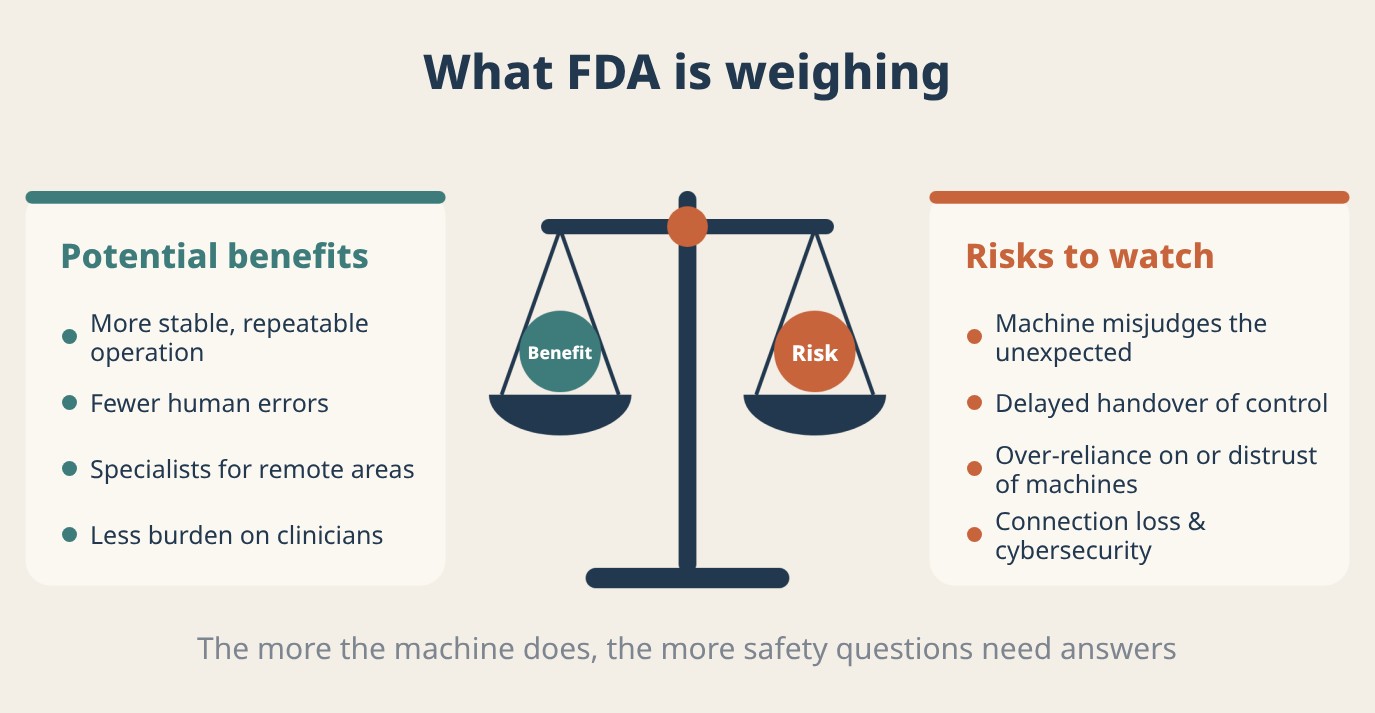
Potential benefits of autonomous functions
- More stable and repeatable performance, especially in long or complex procedures;
- Fewer adverse events caused by human imprecision or lack of experience;
- Less dependence on top specialists, so more patients can be treated;
- Reduced physical and cognitive burden on clinicians.
Risks of autonomous functions
- Acting “on its own” in unexpected situations, with errors occurring before the clinician can intervene;
- Failing to adapt to intra-operative changes, potentially causing bleeding or tissue damage;
- Delays when control is handed back from the machine to the clinician;
- Automation bias (over-trusting the machine and ignoring one’s own judgement) – and its opposite, distrust of the machine;
- Erosion of clinicians’ manual skills, leaving them unable to take over if the system fails;
- Where AI/machine learning is involved: unpredictable performance outside the training data, differences between patient populations, and performance drift over time.
Benefits and risks of remote teleoperation
Benefits: specialist care for remote areas; faster expert treatment for time-critical conditions such as stroke and heart attack; easier remote training.
Risks: network latency or loss of connection; whether on-site staff can take over promptly in the event of sudden bleeding; the remote clinician losing on-site “feel” and auditory cues; and cybersecurity threats faced by a networked device.
One of FDA’s ideas is worth noting: the level of risk depends on how much the machine is allowed to do. A machine completing a small, well-defined step under clinician supervision is clearly in a different risk category from a machine that plans and executes an entire personalised treatment on its own.
Which questions does FDA want answered?
The paper lists 15 questions in four areas:
- Terminology: Do existing terms and classifications accurately describe the state of the industry?
- Benefits and risks of autonomous functions: Are considerations such as procedural complexity, the importance of repeatability, differences in expertise across care settings and the impact on patient outcomes sufficient? What clinical and non-clinical evidence is needed?
- Benefits and risks of remote teleoperation: How do risks change as the degree of teleoperation changes? How should emergencies requiring conversion to manual surgery, or even patient transfer, be considered?
- Risk controls: When the on-site clinician shifts from “operating” to “assisting and supervising”, what risk controls are needed? What roles can verification and validation, human factors, safety features and post-market surveillance play?
Don’t confuse it with another document: the RASD draft guidance
In September 2026, FDA already published a related document – the draft guidance Robotically-Assisted Surgical Devices: Premarket Submissions (published in the Federal Register on 25 September 2026, docket FDA-2026-N-9505). It focuses on submission content such as non-clinical testing, clinical data and labelling, with comments due by 24 November 2026.
| RASD draft guidance | This discussion paper | |
|---|---|---|
| Nature | Draft guidance (once final, a reference for FDA review) | Discussion paper (for discussion only) |
| Focus | How to prepare 510(k)/De Novo submissions for current products | How to evaluate benefit-risk for future autonomous/remote functions |
| Comment deadline | 24 November 2026 | 5 January 2027 |
| Effective date | Draft, not yet in effect | None |
Put simply: one is about “how to submit now”, the other about “how to evaluate in future”.
What does this mean for manufacturers?
Surgical robotics and remote surgery are developing rapidly, and many manufacturers – including in China and Europe – are planning to enter or are already preparing for the US market. The discussion paper sends several signals:
- FDA is actively shaping the framework. Seeking input before any such product has been authorised shows that the regulatory approach is still taking shape – speaking up now has the greatest impact.
- “Degree of autonomy” will become a core variable in risk assessment. During development, clearly define which functions are “automated” and which are “autonomous”, and what role the clinician plays at each step.
- Cybersecurity and human factors will carry more weight. Remote and autonomous functions both mean more connectivity and more human-machine handovers; plan the corresponding verification evidence early.
- Contingency plans will become part of the evaluation. How the system safely converts to manual operation in case of failure or network loss may no longer be just the hospital’s concern, but part of the device’s benefit-risk assessment.
If your product involves surgical robotics, navigation and positioning, remote ultrasound or other devices with autonomous/remote functions, we recommend:
• Following the public workshop on 2–3 December (free to attend online);
• Considering whether to submit comments via Regulations.gov before 5 January 2027;
• For RASD products planned for the US market, reviewing your submission documents against the draft guidance published in September.
EVERBIZ continuously tracks global medical device regulatory developments. If you have questions about FDA, EU MDR or Southeast Asian registrations, please contact us.