
EVERBIZ News Center: company news, global medical device regulatory updates, and registration and compliance insights.

EU Data Act Transparency Statement Template for Medical Devices
The EU Data Act (Regulation (EU) 2023/2854) has applied in full since 12 September 2025. According to Recital 14, medical and health devices clearly fall within the scope of the Act, including: medical devices (such as smart blood pressure monitors, blood glucose meters, ECG devices and implantable devices), digital health platforms and wearables, and services…

EU PMS Data Collection Template
EU PMS (Post-Market Surveillance) is the systematic, proactive and continuous monitoring system that manufacturers must establish under the EU Medical Device Regulation (MDR 2017/745) and the In Vitro Diagnostic Medical Device Regulation (IVDR 2017/746). It is used to track the safety and performance of medical devices throughout their time on the market, identify unknown risks…

EU Data Act Contract Terms Template
The EU Data Act (Regulation (EU) 2023/2854) has applied in full since 12 September 2025. This article focuses on Article 41 of the Regulation, which aims to regulate data access and use and cloud computing contracts by providing non-binding model contractual terms. The body of the standard terms for data access and use and cloud…
Introduction to the EU Data Act
The EU Data Act (Regulation (EU) 2023/2854) is the core legislation of the EU data strategy. It entered into force on 11 January 2024 and has applied in full since 12 September 2025. It aims to build a single market for data, balance the interests of data holders and users, promote fair access to and…

EU Data Act: Use Cases and Applications
The EU Data Act has applied in full since 12 September 2025. Its core use cases are built on four pillars – data sharing for connected products, switching between cloud computing services, B2B/B2C (business-to-business/business-to-consumer) data exchange, and emergency access to data by public sector bodies – covering all relevant economic activity in the EU market,…

Introduction to the ISO/IEC 27701 Standard
ISO/IEC 27701 is an international standard that defines a management system designed to help organisations protect privacy when processing personal data. It builds on the requirements of ISO/IEC 27001 and ISO/IEC 27002 to provide a framework for personal data protection that integrates with an existing information security management system. Chinese manufacturers exporting medical devices to…

The Relationship Between ISO 27701 and Regulation (EU) 2016/679
Chinese manufacturers exporting medical devices to EU countries must meet the MDR (EU Medical Device Regulation). Article 110 in Chapter IX of the MDR explicitly requires medical devices to comply with data protection law [(EU) 2016/679, i.e. the GDPR], and the GDPR compliance bar is higher still when processing patients’ health data (special category personal…
EU Plans to Substantially Simplify the MDR: What Will Change for Certificates, Clinical Evidence and Notified Body Audits?
Over the past two years, what has frustrated companies most about the MDR/IVDR has not been “demanding requirements” but “blocked processes”: limited notified body capacity, duplicated reviews, frequent re-certifications and piling documentation burdens have caused a chain reaction of certificate backlogs, product withdrawals and supply shortages. The amendment proposal (COM(2025) 1023) put forward by the…

Introduction to the GDPR (General Data Protection Regulation) for EU Medical Devices
Regulation (EU) 2016/679 (the General Data Protection Regulation, GDPR, on the protection of natural persons with regard to the processing of personal data and on the free movement of such data) has applied since 25 May 2018. It repealed Directive 95/46/EC. Chinese manufacturers exporting medical devices to EU countries must meet not only the MDR…
How Can Manufacturers Hedge Risk Through Insurance Under the MDR?
The EU MDR (EU 2017/745) is not only a technical regulation but also a “liability regulation”. For medical device manufacturers, obtaining CE marking does not mean compliance is complete; the real challenge comes after CE – ongoing quality, risk and regulatory responsibility once the product is on the market. Many companies do not fully realise…
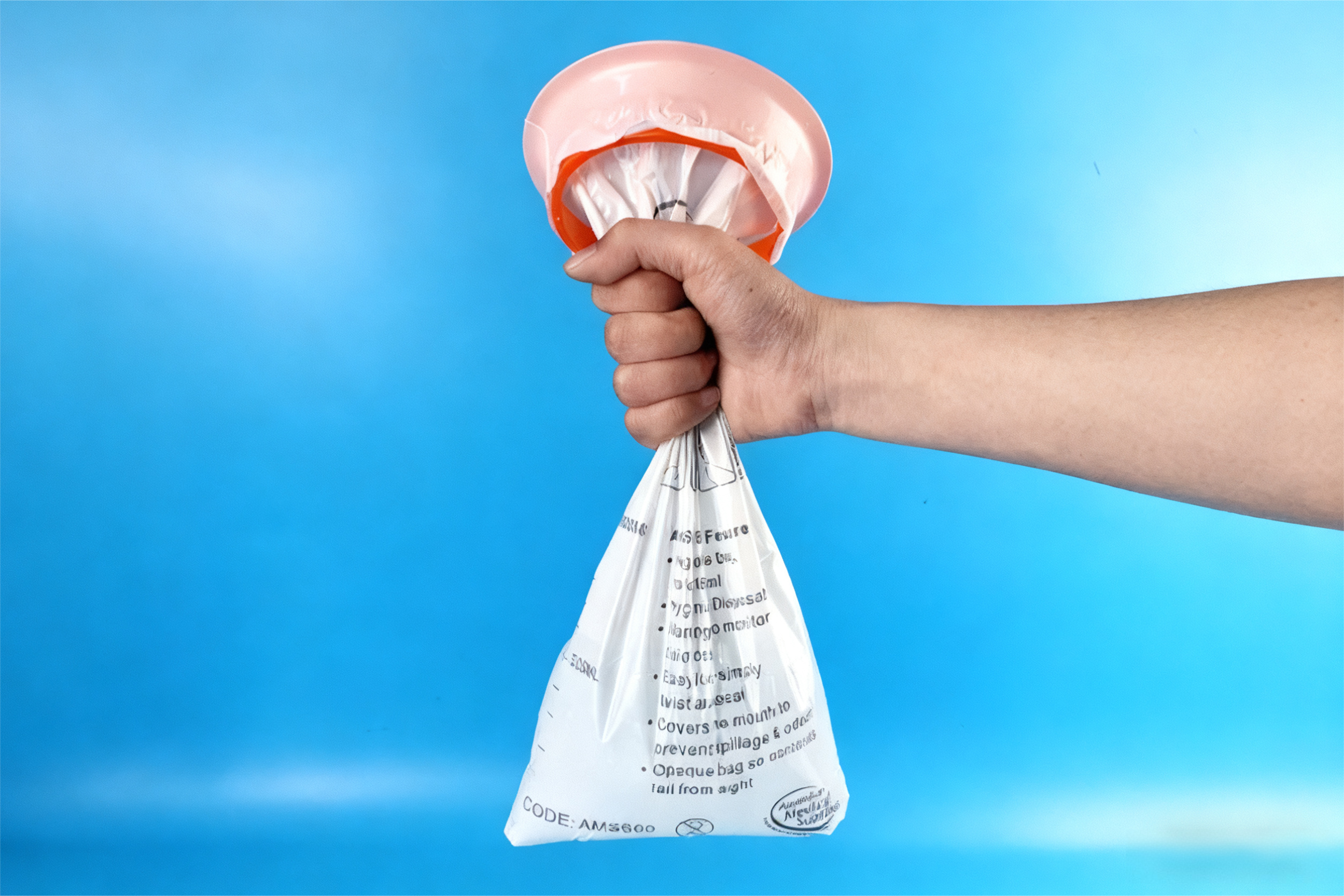
What Class Are Disposable Urine Bags and Vomit Bags Under the MDR? Why Are They So Often Misclassified?
In our medical device registration consulting work we have found a very common misconception: simple collection products such as disposable urine bags and emergency vomit bags are often wrongly classified by companies as MDR Class IIa. This misunderstanding is not only widespread; once a product is misclassified, it causes: Costs that can be dozens of…

Understanding the FDA’s Stricter EMC Requirements for Common Electromagnetic Emitters
Recently, many companies undergoing FDA 510(k) EMC review have received similar requests for additional information: Please provide immunity data related to 5G Please explain how the device performs in RFID environments Please provide a risk analysis for common EM emitters Many engineers are baffled: “We have already completed all EMC tests according to IEC 60601-1-2…